China Auto Parts 2026: How China Rewrote the Rules for Industrial Supply Chains
By 2026, U.S. industrial sectors are shifting to Chinese machinery, with European equipment needing replacement by alternatives. The core challenge is managing complex supply chains.
Article
By 2026, the industrial landscape in the U.S. has transformed. Factories now run thousands of Chinese machines, and European equipment needs deep "import substitution" through Eastern alternatives.
The biggest pain point for importers today is the massive product range.
When a single container holds 500 SKUs—from precision bearings to printed circuit boards—the risk of selection errors or customs delays skyrockets.
Experts at China Global Hub explain how to automate component supply in 2026 and avoid turning your warehouse into a graveyard of dead stock.
Reverse Engineering and Finding Spare Parts Alternatives in China 2026
Searching for spare parts using old catalog numbers from Siemens, Bosch, or Fanuc often hits a dead end due to sanctions and product line updates.
China Global Hub's strategy for finding alternatives:
- Direct Access to OEM Factories: Many European giants historically sourced components from factories in Zhejiang and Guangdong provinces. We locate the exact production lines that made the original parts. You get identical quality without the brand markup.
- Technical Audit of Specifications: If the exact factory isn't found, our engineering team in Shenzhen selects an alternative based on physical and chemical properties (steel grade, tolerances, electrical parameters). We don't just find "something similar"—we guarantee full compatibility with your equipment.
Small Lot Logistics: Shipping Spare Parts from China by Air and LCL
In 2026, sourcing components from 1688 for production requires a differentiated logistics approach. We split the flow into three categories:
- Emergency Stock (Class A): If a machine stops and downtime costs millions—use air freight for spare parts from China. In 2026, "warehouse-to-warehouse" time is 3–5 days.
- Scheduled Maintenance (Class B): Consumables (filters, cutting tools, belts). The best option is LCL (less-than-container load) by rail.
- Strategic Stock (Class C): Heavy assemblies, machine beds, motors. Ship by sea or rail in full containers (FCL).
Summary Table: Spare Parts Categories and Delivery Times 2026
Customs Clearance for Spare Parts by List: Avoiding Customs Pitfalls
Clearing 500 different items is a nightmare for any declarant. To avoid delays, we use two techniques:
- Grouping by HS Codes: In 2026, customs allows grouping parts under one code if they are shipped as a "repair kit." This drastically reduces the number of declaration sheets and minimizes the risk of customs value adjustments.
- Preparing Technical Documentation: For every complex part, we prepare a product certificate in English in advance. This eliminates 90% of inspector questions about the item's purpose before the declaration is even filed.
Quality Control 2026: Sourcing Bearings and Electronics in China
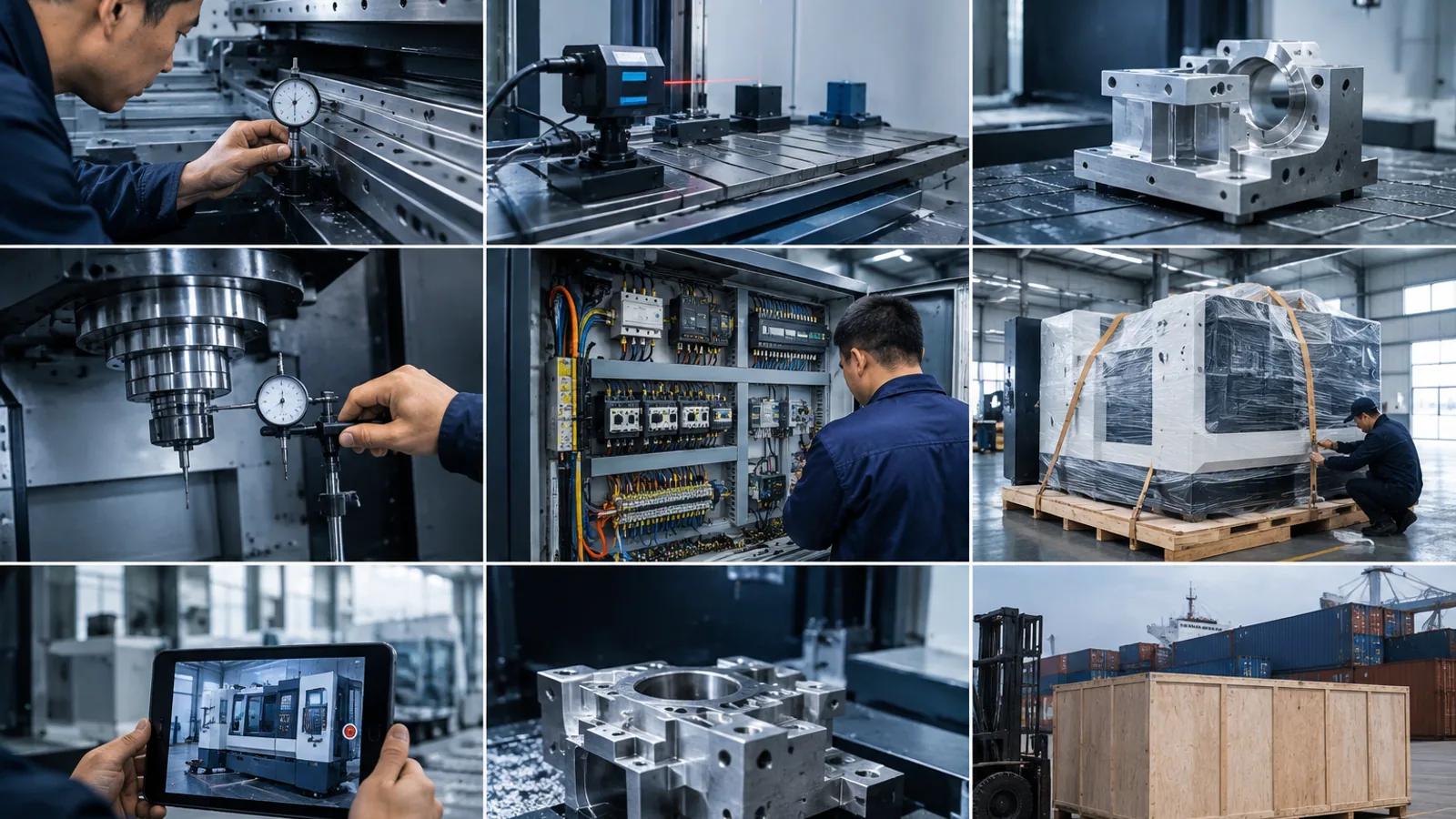
The risk of counterfeit or refurbished parts in China remains high. Our inspection protocol includes:
- Batch Inspection: Parts are checked against strict drawing compliance protocols.
- Electronics Bench Testing: All controllers and sensors are tested on a workbench before shipping. We verify both the hardware and the firmware version.