Export to China 2025: strategies, cases and recommendations
Export to China 2025 continues to be a priority direction for Russian business. Despite a decrease in trade turnover at the beginning of the year, certain industries, such as the agro-industrial complex and anthracite supplies, show stable growth. Russian companies are actively adapting their products for the Chinese market and developing long-term strategies to secure success.
Article
Export to China 2025: successful cases and strategies of Russian companies
Export to China 2025 continues to be a priority direction for Russian business. Despite a decrease in trade turnover at the beginning of the year, certain sectors, such as the agro-industrial complex and anthracite supplies, demonstrate steady growth. Russian companies actively adapt their products to the Chinese market and build long-term strategies for securing success.
Current trends in export to China 2025
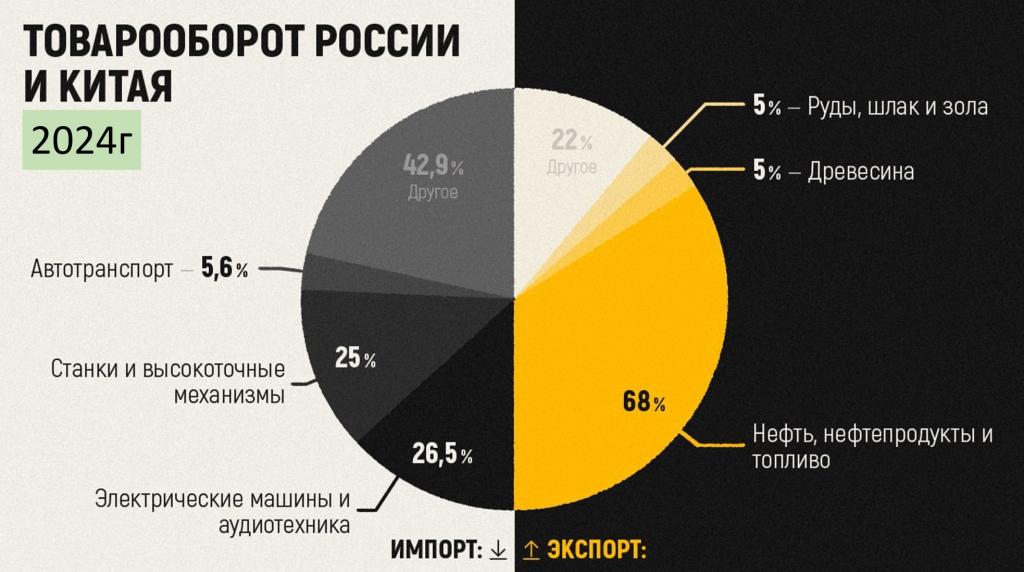
In 2024, trade turnover between Russia and China reached a record $245 billion (RBC). In January-May 2025, total trade turnover decreased by 8.2% to $88.8 billion: exports fell by 9.5%, and imports by 6.6%.
However, Russian companies found opportunities for growth in strategic sectors. The agro-industrial complex, oil, fish and seafood supplies showed an increase of 15% to 48%, while coal (anthracite) strengthens its position in the Chinese market
Successful export cases to China
Agro-export: fish, meat and oil
Russian agro-export to China 2025 continues to actively develop. The main directions are fish, meat, peas, oil, and seafood. Fish supplies increased by 19%, and oil by 48%.
Companies achieve success by:
- certifying products according to Chinese standards,
- adapting branding to local requirements,
- participating in specialized exhibitions and fairs.
A mistake to avoid: copying European models. The Chinese market requires a localized approach and consideration of consumer preferences.
Energy carriers and raw materials
Oil and gas exports have decreased due to falling global prices, but coal, especially anthracite, shows growth and occupies an important niche. Russian companies adapting deliveries to the actual needs of the Chinese market strengthen their positions and develop long-term contracts.
LSI-keys: coal export, energy supplies, raw materials market in China
B2B goods and machine engineering
Supplies of machines and high-tech products show growth. Key success factors:
- localizing products to Chinese standards,
- certifying products,
- marketing through Tmall and Alibaba marketplaces.
This allows Russian companies to successfully establish themselves in the B2B supply segment to China 2025.
Checklist: how to enter the B2B market in China
- Certification of products according to Chinese standards.
- Participation in exhibitions and fairs, promotion through Tmall and Alibaba.
- Digital marketing through WeChat and local platforms.
- Payments in yuan and rubles to reduce currency risks.
- Alternative logistics: rail and multimodal routes.
- Localization of marketing, packaging and language to the cultural specifics of China.
Common mistakes when entering the Chinese market
- Ignoring product certification.
- Exporting without adapting to local requirements.
- Underestimating financial and logistical risks.
- Short-term strategies instead of long-term planning.
Trends in export to China 2025
- Overall decline in trade turnover – minus 8% for the first six months.
- Agro-export is growing – products such as oil, meat and fish are in demand.
- Energy supplies show mixed dynamics, but coal (anthracite) is strengthening its position.
- Infrastructure projects, including the “Power of Siberia”, open long-term prospects.
- Growing interest in localized B2B products and technological solutions.